

Who WANTS to live in a facility?
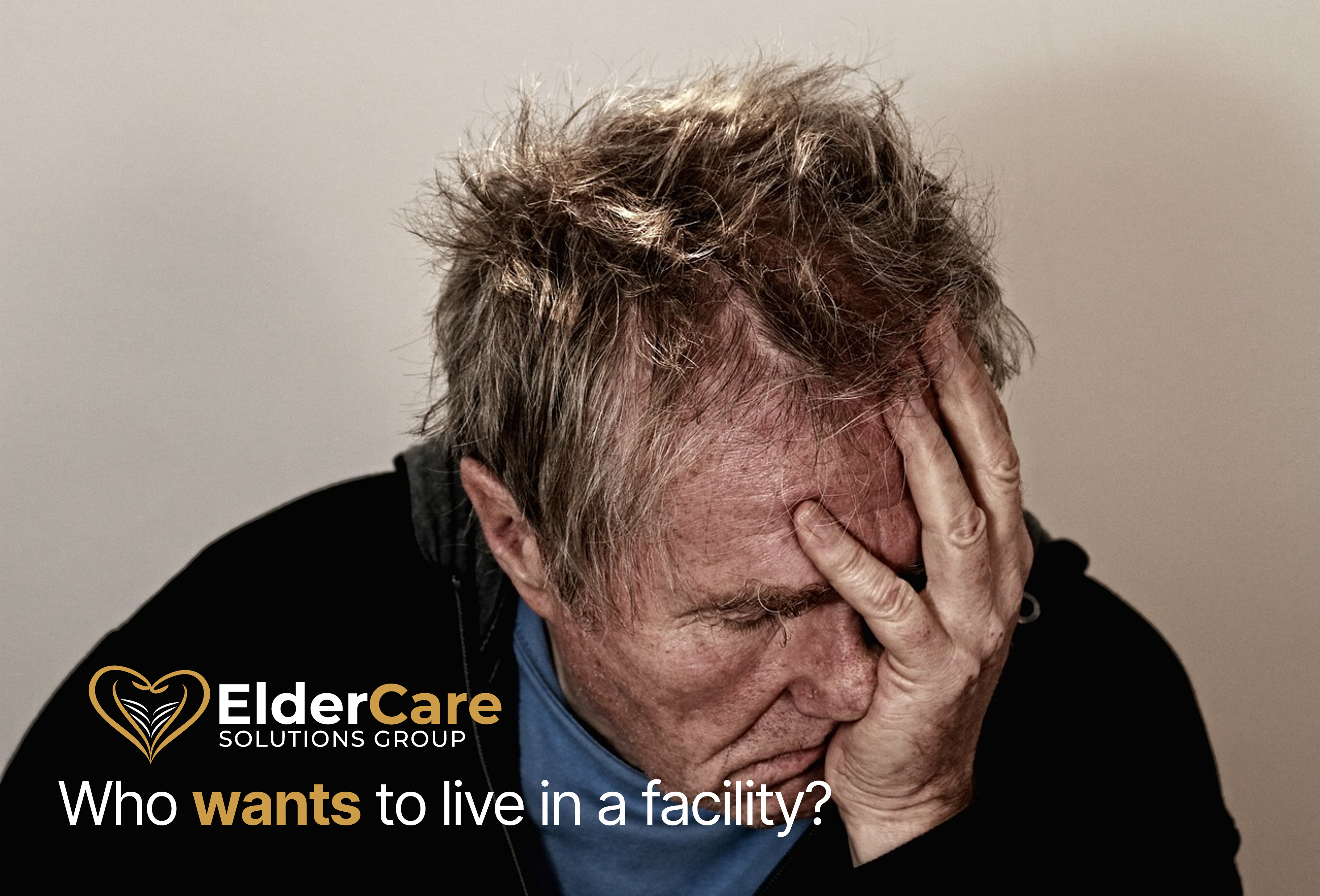
There’s a truth in senior care that everyone knows but almost no one says out loud: nobody wants to go into a facility. Families avoid it. Seniors fear it. And yet the industry keeps doubling down on the same institutional model, hoping that if they decorate it nicely enough, people will forget what it really is.
But what if the problem isn’t the people?
What if the problem is the model itself?
What if care could look like family again?
The Hidden Crisis No One Wants to Admit
COVID didn’t create the crisis in senior care — it exposed it.
Window visits.
Hands pressed against glass.
Families begging for access to their own loved ones.
Seniors dying in isolation because “the rules” said it was safer.
Those images broke something in the American psyche. They revealed a system that prioritizes compliance over compassion, regulation over relationship, and liability over humanity.
And families responded the only way they could:
They started doing whatever it took to avoid institutional care.
They remodeled homes.
They rearranged work schedules.
They leaned on each other.
They chose anything but a facility.
Because deep down, everyone knows: institutional care is the last resort, not the dream.
The Licensing Myth: Compliance ≠ Care
We’ve been conditioned to believe that licensing equals safety and quality. But licensing actually measures something very different:
refrigerator temperatures
staff ratios
documentation
approved equipment
state‑mandated routines
None of those things guarantee love, presence, or dignity.
Take the Texas bed‑rail example.
A woman who was repeatedly falling because half‑rails were “safer” under state law. Her family begged for full rails. The licensed facility couldn’t provide them — not because it wasn’t right for her, but because it wasn’t legal.
When she moved into an unlicensed family home, she got the full rails she needed. She stopped falling. She became more active. She lived two more years.
The licensed model treated the regulation.
The family model treated the person.
Simple Doesn’t Mean Easy
Family‑based care is simple:
Create a home people want to be in
Be authentically yourself
Build on real relationships
Take responsibility for those in your care
Simple doesn’t mean easy.
But clarity makes the path doable.
The Ministry Model: Freedom With Responsibility
The First Amendment gives religious ministries the freedom to operate outside state facility regulations — not to avoid responsibility, but to embrace a higher one.
In a ministry home:
Families visit often
Transparency is natural
Accountability is relational
Oversight comes from the people who matter most
This isn’t less oversight.
It’s better oversight.
The Choice Before Us
We’re standing at a crossroads in senior care.
One path continues the institutional model — sterile, regulated, disconnected.
The other path returns to what God designed care to be — family, home, relationship, belonging.
The Silver Tsunami is real.
The need is real.
But the solution isn’t more facilities.
The solution is REAL:
REAL families
REAL homes
REAL care
Rooted in faith, protected by the First Amendment, grounded in relationship — not regulation
This isn’t just breaking the mold.
It’s returning to the original design.
ElderCare Solutions Group focuses on supporting more relationship-centered approaches to care—helping families and providers create environments that prioritize dignity, connection, and real daily life.